Healthy Dinner Recipe

Baked Salmon with Vegetables

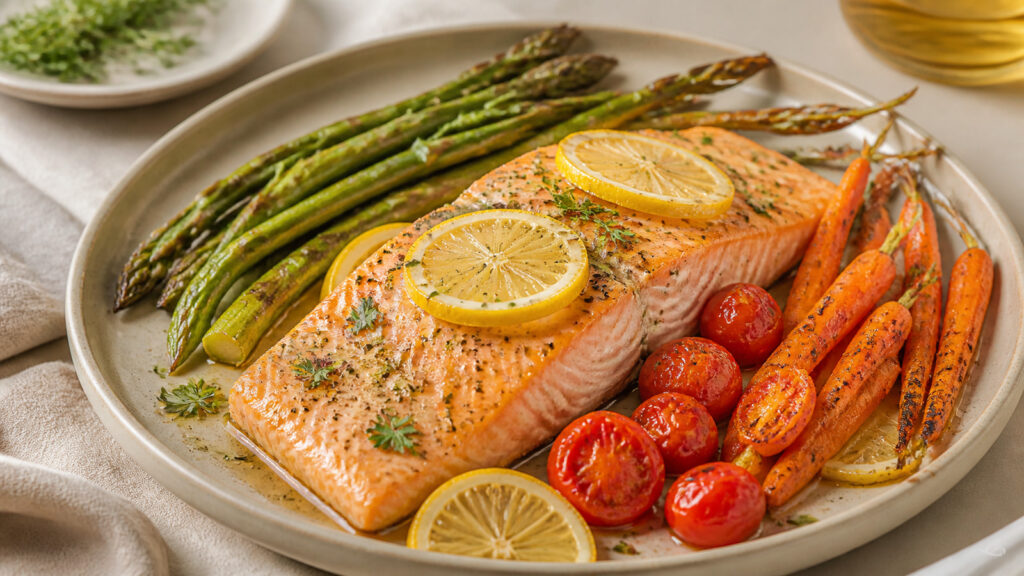
Tender salmon baked with lemon, herbs, and colorful vegetables for a fresh, easy, and balanced dinner.

Baked Salmon with Vegetables is a healthy and flavorful baked salmon dinner made with lemon, garlic, herbs, and colorful vegetables. Perfect for a simple weeknight meal or a light family dinner.

Jump to Recipe
Prep Time10 mins
Cook Time20 mins
Total Time30 mins
Servings4
DifficultyEasy

About This Recipe

This baked salmon with vegetables is fresh, colorful, and easy to prepare. The salmon bakes until tender while the vegetables roast around it. Lemon, garlic, and herbs bring everything together for a balanced meal. It is designed for healthy lunches, colorful sides, and lighter dinners and focuses on balanced homemade flavor without complicated steps. The extra notes below help you choose ingredients, avoid common mistakes, store leftovers safely, and serve it in a way that feels complete.

Why You’ll Love This Recipe

  • It gives you balanced homemade flavor without complicated steps using simple steps that are easy to follow at home.
  • It works well for healthy lunches, colorful sides, and lighter dinners, so it is practical beyond just one occasion.
  • The recipe is flexible enough for small ingredient swaps without losing the main flavor.
  • The instructions are broken into clear steps, making the cooking process less stressful.

Ingredients

For the Salmon

  • 4 salmon fillets
  • 2 tablespoons olive oil
  • 2 tablespoons lemon juice
  • 2 garlic cloves, minced
  • 1 teaspoon salt
  • 1/2 teaspoon black pepper
  • 1 teaspoon dried parsley

For the Vegetables

  • 1 bunch asparagus
  • 2 carrots, sliced
  • 1 cup cherry tomatoes
  • 1 lemon, sliced
  • 1 tablespoon olive oil

For Serving

  • Cooked rice
  • Quinoa
  • Optional: fresh parsley

Ingredient Notes

  • Salmon: Choose similar-sized pieces so they cook evenly, and avoid overbaking so the fish stays tender.
  • Garlic: Fresh garlic gives the best aroma; cook it only until fragrant so it does not taste bitter.
  • Citrus: Add lemon or lime near the end when possible to keep the flavor bright and fresh.
  • Fresh produce: Dry greens and vegetables well after washing so dressings and seasonings cling instead of sliding off.
  • Salmon fillets: Salmon fillets helps build the main flavor and texture of this recipe, so use a fresh, good-quality option when you can.

Substitutions

  • Use another firm fish fillet if salmon is not available, but adjust the cooking time as needed.
  • Change the vegetables based on the season, keeping the pieces similar in size for the best texture.
  • For a dairy-free version, use your favorite dairy-free cheese, milk, cream, or yogurt substitute where appropriate.
  • Fresh herbs can be replaced with dried herbs; start with a smaller amount because dried herbs are more concentrated.

Instructions

Step 1: Prepare the Oven

Preheat your oven to 200°C or 400°F. Line a baking sheet with parchment paper. Starting with a properly heated oven helps the recipe cook evenly from the first few minutes.

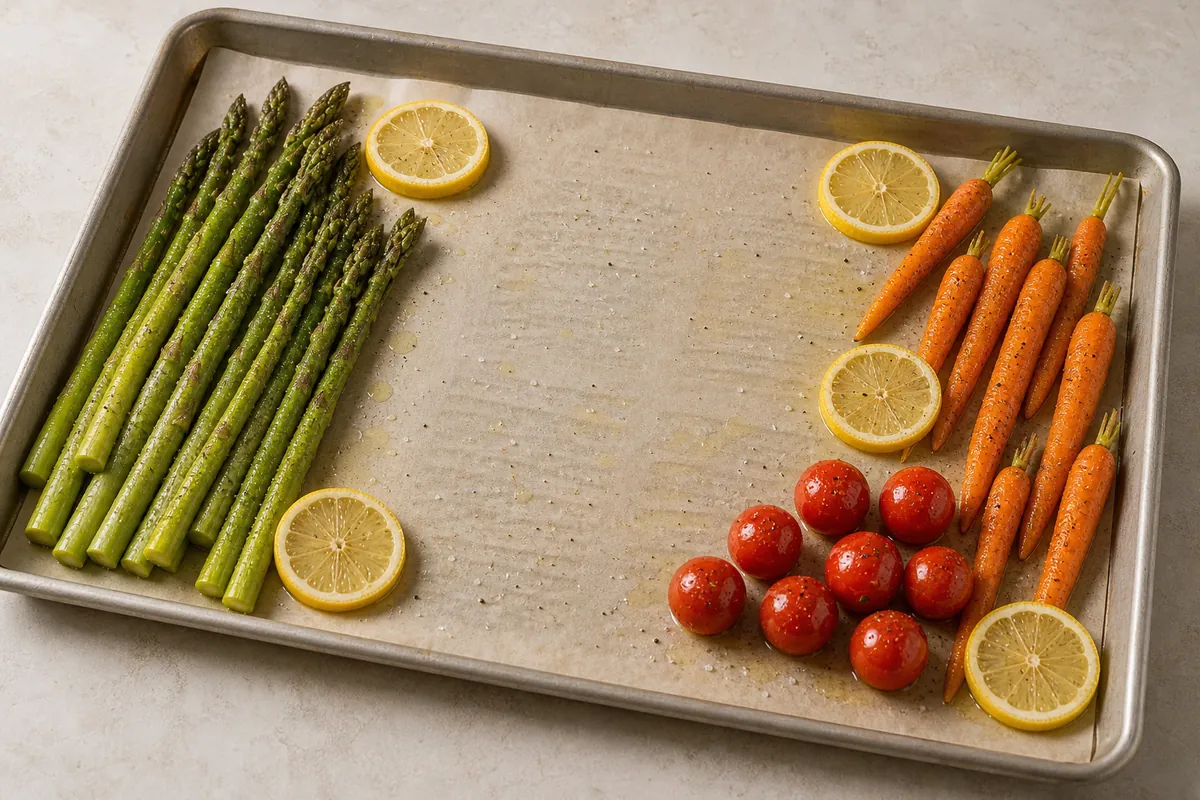
Step 2: Season the Vegetables

Place asparagus, carrots, tomatoes, and lemon slices on the baking sheet. Drizzle with olive oil and season lightly. Season evenly on all sides so every bite has balanced flavor instead of only the surface tasting seasoned.
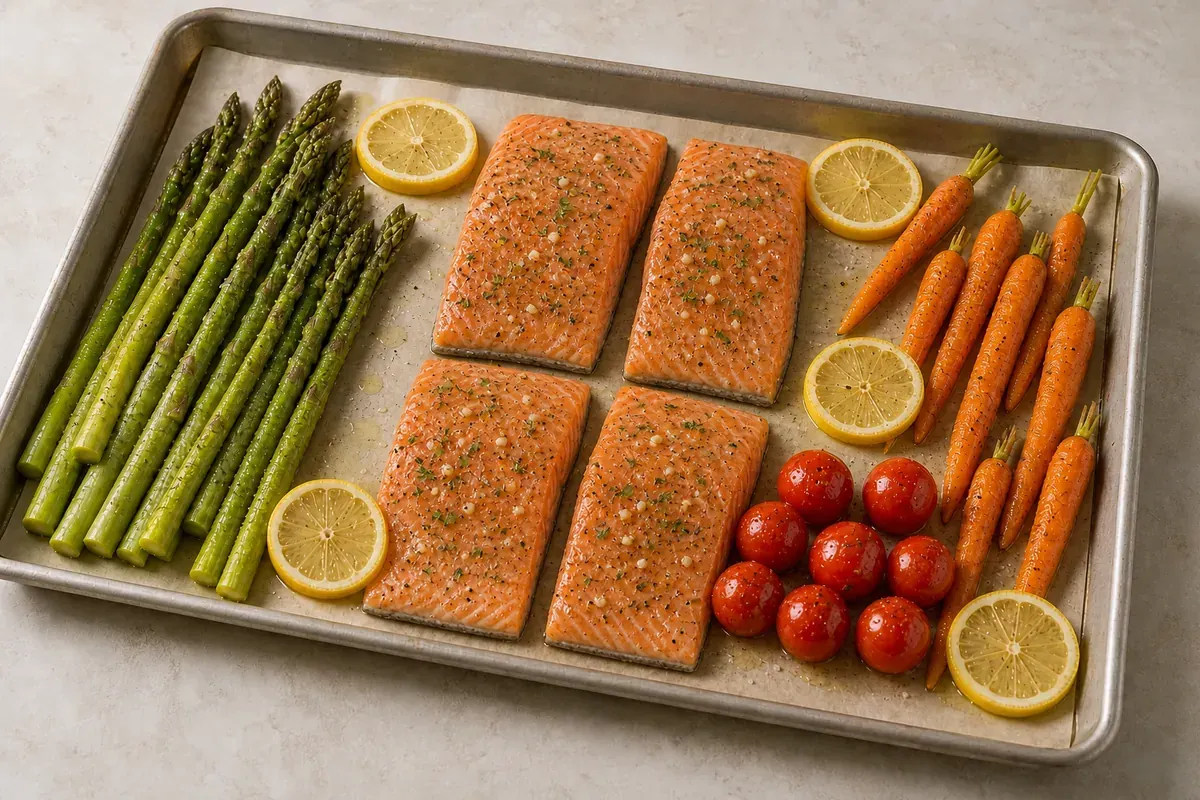
Step 3: Season the Salmon

Place salmon fillets on the sheet. Brush with olive oil, lemon juice, garlic, salt, pepper, and parsley. Season evenly on all sides so every bite has balanced flavor instead of only the surface tasting seasoned. Watch closely because seafood cooks quickly and can become tough if left on the heat too long.
Step 4: Bake

Bake for 18–20 minutes, or until the salmon flakes easily with a fork. Watch closely because seafood cooks quickly and can become tough if left on the heat too long. Check a few minutes early because ovens can vary, and look for golden edges, bubbling sauce, or a cooked-through center.

Step 5: Rest Briefly

Let the salmon rest for a few minutes before serving. Watch closely because seafood cooks quickly and can become tough if left on the heat too long.

Step 6: Serve

Serve with rice, quinoa, or a fresh salad. Add fresh garnishes at the end for the best color, texture, and flavor.
How to Store Leftovers

  • Store leftover Baked Salmon with Vegetables in a shallow airtight container in the refrigerator once it has cooled.
  • Seafood is best enjoyed within 1–2 days for the freshest flavor and texture.
  • Keep sauces or toppings separate if possible so the main ingredients do not become too soft.

How to Reheat

  • Reheat gently over low heat or in short microwave bursts so the seafood does not become rubbery.
  • Add a small splash of water, broth, lemon juice, or sauce if the dish looks dry.
  • Stop reheating as soon as it is warmed through rather than cooking it a second time.

What to Serve With It

  • Steamed rice, roasted potatoes, or warm bread
  • A simple green salad
  • Roasted or steamed vegetables
  • A fresh fruit salad or light dessert after the meal

Common Mistakes to Avoid

  • Overcooking seafood. It cooks quickly and can turn dry or rubbery if left on the heat too long.
  • Forgetting to taste and adjust seasoning before serving. A little salt, citrus, herbs, or sauce can make the flavors brighter.
  • Serving immediately without a short rest when the recipe is baked, saucy, or cheesy. A few minutes helps it set and makes serving easier.

Pro Tips for Best Results

  • Read the full recipe once before starting so the prep, cooking time, and finishing steps are clear.
  • Measure and prepare ingredients before heating the pan or oven; this keeps the cooking process smooth and prevents rushed mistakes.
  • Pat seafood dry before cooking to help it brown and keep the seasoning from sliding off.
  • Remove seafood from the heat as soon as it is cooked through to protect the delicate texture.
  • Spread ingredients in a single layer so they roast, bake, or crisp evenly.
  • Cut vegetables into similar-sized pieces so every bite has a balanced texture.

Nutrition Information

Nutrient Per Serving
Calories 390
Protein 36g
Carbohydrates 12g
Fat 22g
Sugar 5g

Nutrition is an estimate and can vary based on ingredient brands, portion size, and substitutions.

Frequently Asked Questions

Can I make Baked Salmon with Vegetables ahead of time?

Yes. You can prepare many parts of Baked Salmon with Vegetables ahead of time, such as chopping ingredients, mixing sauces, or cooking components. For the best texture, finish the final cooking or assembly close to serving when possible.

How do I keep Baked Salmon with Vegetables from tasting dry?

Avoid overcooking, use the sauce or cooking liquid listed in the recipe, and let the dish rest briefly before serving when appropriate.

Can I use a different protein?

Yes. You can usually swap in a similar protein, but cooking time may change depending on the size and thickness. Always cook meat or seafood until it is properly done before serving.

Can I freeze Baked Salmon with Vegetables?

It can be frozen if needed, but seafood usually has the best texture when eaten fresh. Cool completely, freeze in an airtight container, and reheat gently.

Is Baked Salmon with Vegetables good for meal prep?

Yes. Portion leftovers into containers and refrigerate. Add fresh garnishes or a small splash of sauce after reheating to make it taste freshly made.

How can I add more flavor?

Add fresh herbs, a squeeze of lemon or lime, extra garlic, toasted spices, or a small amount of your favorite sauce. Taste as you go so the flavor stays balanced.

About the Author

Written by the FreshFork Recipes Team. This Baked Salmon with Vegetables guide was created to give home cooks clear steps, practical substitutions, storage advice, and serving ideas so the recipe feels useful from start to finish.

Final Note: This baked salmon with vegetables is fresh, healthy, and easy to prepare. It is a great recipe for a balanced homemade dinner.
More Recipes

Similar Recipes

Try another fresh and easy recipe from FreshFork Recipes.